

Orlov and Sveshnikov Steal the Show at The Art Film Festival

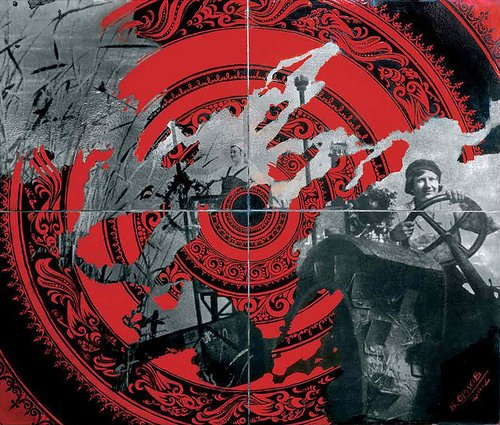
Orlov. Let It Be So. Still from the film. Courtesy of The Art Film Festival
Two new films exploring the lives and work of nonconformist artists Boris Orlov and Boris Sveshnikov, set to premiere at the forthcoming Art Film Festival (TAFF) in Russia, offer contrasting approaches to documentary filmmaking.
Organised by The Art Newspaper Russia and the In Artibus Foundation, the Art Film Festival (TAFF) opens next week, bringing a selection of new art documentaries and biopics to audiences in ten cities across Russia. International productions dominate the programme. While major Hollywood studios have largely withdrawn from the Russian market since 2022, many European studios and independent filmmakers have adopted a more flexible approach. This year’s festival features films from the UK, Bulgaria, Italy, France, Spain, Belgium, Brazil, Senegal and Indonesia.
Domestic Russian productions have always occupied a small but significant place in the festival’s programme. This year, two documentaries exploring the lives and work of nonconformist artists will have their premieres. One focuses on Boris Orlov (b. 1941), the other on the late Boris Sveshnikov (1927–1988). Both films were produced by the Prometheus Foundation and share much of the same creative team. ‘Orlov. Let It Be So’ was directed by Ekaterina Pron’ko and Elena Chernyak, while ‘Boris Sveshnikov. An Unfinished Dream’ was directed by Nikolai Flotsky, with Chernyak and Pron’ko serving as screenwriter and general producer, respectively. Despite these close connections, the two films adopt strikingly different approaches to portraying art and artists on screen.

Of all the artists active on the contemporary Russian art scene, Boris Orlov is a rare gift to any interviewer. Now aged 85, he remains a brilliant conversationalist, his memory and wit undiminished by time. His art, too, lends itself naturally to the camera, with its vivid colours, striking forms and eccentric characters. The irony inherent in his work is immediately apparent to anyone with even a passing familiarity with Soviet propaganda or art history, particularly the sculptural traditions of the Baroque.
For decades, Orlov has explored the concept of Empire and its absurd collisions with the everyday reality around him. His work exposes the contradictions inherent in the very notion of a ‘Soviet empire’. By combining the exaggerated pathos and grandeur of imperial Rome and the European Baroque with the banal, often hypocritical clichés of Soviet propaganda, his sculptures achieve a distinctly comic effect. His approach has much in common with Sots Art, but unlike his younger contemporaries, who drew inspiration from Western Pop Art, Orlov looks to the visual language of historical empires for his imagery.
Directors Ekaterina Pron’ko and Elena Chernyak have made a commendable effort to show viewers as much of Orlov’s work as possible, no easy task given that many of his sculptures are held in private collections in Russia and abroad and are therefore inaccessible to film crews. Where important works could not be filmed, the directors have incorporated photographs instead, lending certain sequences the appearance of an animated catalogue.
Yet, despite its protagonist being very much alive, ‘Orlov. Let It Be So’ has something of a retrospective, almost memorial quality. While the film offers a detailed survey of Orlov’s artistic career, it reveals surprisingly little about the man himself. There is also a certain claustrophobia to its atmosphere: every scene unfolds indoors, either in museum galleries or in the artist’s immaculate studio.
Orlov himself is the film’s principal voice, and his reflections on his work are witty, precise and insightful. Discussing his use of colour, for instance, he offers an almost aphoristic observation: “Just as in music there is a concerto for orchestra and piano, so I create a concerto for form and colour. I do not paint my sculptures; I apply colour to the form. In my work, form plays its own role and colour plays its own.”
Orlov is frequently shown discussing his art, but never actually creating it, appearing almost like a guide leading visitors through an imaginary museum of his own work. This impression is reinforced by contributions interspersed throughout his monologue from two former museum directors: Zelfira Tregulova of the State Tretyakov Gallery and Elizaveta Likhacheva, formerly of the Museum of Architecture and the Pushkin State Museum of Fine Arts. Both are widely respected as accomplished and energetic museum administrators, although neither is particularly known for her scholarship or curatorial expertise in nonconformist art or Orlov’s work specifically. As a result, their contributions consist largely of well-deserved praise, adding little to the insights offered by the artist himself.

The atmosphere on screen only begins to warm up with the appearance of Orlov’s long-time friend and fellow sculptor Grisha Bruskin (b. 1945). The two are filmed in conversation at Bruskin’s studio, although, curiously, the sculptures visible around them are not identified on screen as his work. Perhaps the filmmakers assume that their audience is sufficiently knowledgeable to distinguish between the two artists. This may well be the case, as the film seems directed primarily at an audience of art professionals rather than the wider public. One hopes that it will eventually be made available online, allowing students and scholars to benefit from this valuable record of Orlov and his work.
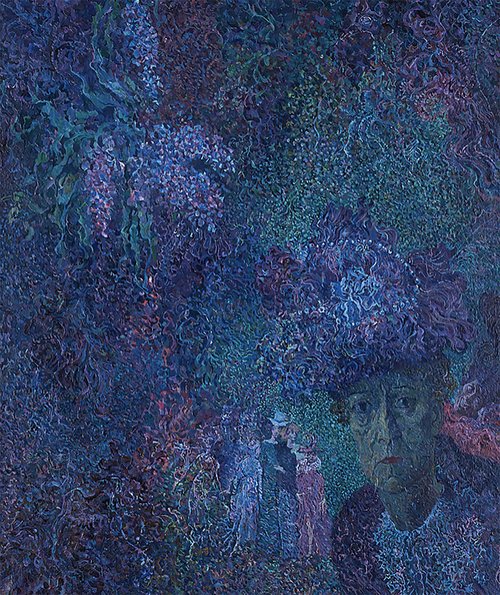
In ‘Boris Sveshnikov. An Unfinished Dream,’ director Nikolai Flotsky takes a traditional documentary approach, providing as much context as possible, from the numerous paintings of Heironymus Bosch (c.1450–1516) and Pieter Bruegel the Elder (c.1525–1569) to the landscapes of Tarusa, the small town where Sveshnikov spent the most productive years of his life. His story certainly deserves a full-scale biopic. At the age of 19, Sveshnikov - an art student at the time - was detained on a Moscow street and sent to a labour camp on the false charge of ‘anti-Soviet propaganda’. He spent eight years there, nearly perishing from hunger and hard labour, yet he found refuge in art. While working as a night warder at the camp’s woodworking workshop, he managed to draw and even paint at night. He was one of the few artists to create a substantial body of work in the Gulag and smuggle it out of the camp. His drawings, which blend the harsh reality of camp life with fantasy, are among the rarest pieces of visual evidence of the Gulag created on site by an inmate. He drew realistic landscapes populated by surreal characters inspired by Bosch, Bruegel and Francisco Goya (1746–1828). His unique style of surrealism fully developed in the Gulag and evolved towards a darker blend of pointillism over the years.

The film explores the origins of Sveshnikov’s art, highlighting his fascination with European art of the past, particularly the Northern Renaissance. It also pays tribute to those who played an important role in his life, including the poet and translator Arkady Steinberg, who saved his life in the camp, and the artists of Tarusa, the town where Sveshnikov settled following his release from the Gulag.
The film also traces Sveshnikov’s influence on a younger generation of artists. One of its narrators is Pavel Pepperstein (b. 1966), who knew Sveshnikov personally. Pepperstein recalls their encounters and reflects on the influence Sveshnikov had on his own drawings of the 1970s and 1980s. Others who knew the artist also appear on screen, including Yuri Volkogonov, who formerly worked at the Primorskaya State Picture Gallery in Vladivostok, and Galina Manevich, widow of the artist Eduard Steinberg (1937–2012). Together, they paint a portrait of a mystic who seemed only partially anchored in the real world.

Sveshnikov himself appears only briefly in the film, but these rare glimpses are particularly memorable, revealing a quiet, aloof yet strong and multifaceted personality. In an excerpt from a 1987 interview, he refuses to discuss how he found artistic inspiration in the camp. In another fragment, dated 1996, he objects to being labelled a ‘nonconformist’.
Sveshnikov’s art presents a particular challenge for filmmakers. Its power lies in the intricate precision of his drawings and the shimmering, fluid textures of his paintings. These are works that demand time and close attention. The camera responds by adopting the viewer’s unhurried, inquisitive gaze, gliding slowly across paintings and drawings, lingering on individual details rather than attempting to capture the whole.

The effect is almost surreal, reminiscent of Alice in Wonderland: tiny, meticulously executed pencil marks and brushstrokes expand to monumental proportions on the cinema screen. As the familiar scale of things dissolves, we find ourselves drawn into Sveshnikov’s strange, otherworldly universe. Even viewers encountering his art for the first time are likely to leave the cinema under its spell.
The Art Film Festival
Moscow, St. Petersburg, Perm, Nizhny Novgorod, Ivanovo, Kazan, Novosibirsk, Ekaterinburg, Samara, Vladimir. Russia
19 October – 1 November 2026