

Why are we so obsessed with knowing artists?

One Hundred and One Dreams, or What I Know About Lenya P. Still from the movie teaser. Courtesy of Park Productions
This autumn, Park Productions will release Marina Tsurtsumiya’s feature-length film ‘One Hundred and One Dreams, or What I Know About Lenya P’. Filmed in Russian with English subtitles, it is neither a conventional documentary nor an attempt to produce the definitive biography of Leonid Purygin. Instead, it is a deeply personal meditation on memory, friendship and artistic imagination.
The further back we look in time, the more the work eclipses the person who created it. Today, we expect more. We want to know every detail of an artist’s life – their loves, losses, habits and beliefs – as though understanding the person is essential to understanding the work. Yet some artists resist that scrutiny. They leave behind only fragments of themselves, as if they intended their art to outlive every biographical detail. Perhaps they wanted their work to stand as an expression of something universal rather than personal. Or perhaps they understood that they had already revealed themselves. They had painted their lives into their work, leaving no need for explanation.

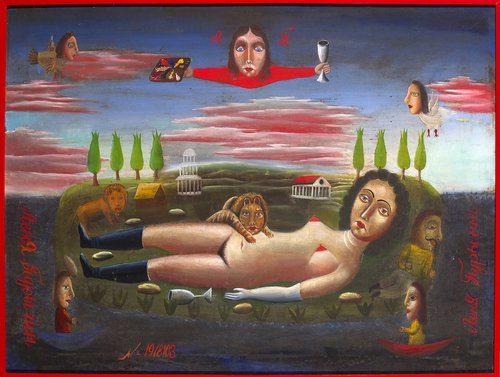
Leonid Purygin (1951–1995) may be one of those artists. More than thirty years after his death, he remains strangely elusive. Friends remember him differently, stories blur into myth, and there is still no definitive biography. Yet one thing is certain: in the Russian art world, nobody looks at one of his paintings without recognising it immediately. Purygin created a visual language entirely his own.
His life only deepens the mystery. He occupied an unusual position in late Soviet art, never fully belonging either to the artistic establishment or to the celebrated Moscow underground. His career unfolded during the final decades of the Soviet Union before taking him briefly to New York, where his paintings became commercially successful but his life grew no less complicated. He died in 1995 at the age of forty-two, leaving behind an extraordinary body of work and surprisingly few certainties about the man himself.

Marina Tsurtsumiya’s ‘One Hundred and One Dreams, or What I Know About Lenya P’ is not interested in solving that mystery. Instead, it embraces it.
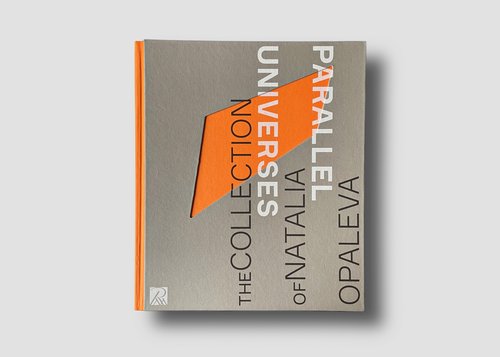
When we meet over Zoom, Marina is sitting in her kitchen in Moscow, shelves lined with Russian porcelain behind her. She tells me that the film emerged almost by accident. Friends introduced her to Natalia Opaleva, one of Purygin’s most committed supporters and collectors, who offered her complete artistic freedom. “She gave me a happy ticket,” Marina says. “She simply told me to make the film I wanted.”
From the outset she knew this would not be a conventional documentary. Instead, she describes it as “a film of complex artistic form” – one that would move between memory, dreams, archival material and imagination, much like Purygin's own paintings.
The project is deeply personal. Marina’s father, cinematographer Roman Tsurtsumiya, belonged to the circle of artists, writers and filmmakers who gathered in Moscow during the final decades of the Soviet Union. Purygin was a regular visitor to the family home, and Marina knew him as a child. Those friendships were forged under difficult circumstances. When Marina became seriously ill with leukaemia as a young girl, her family struggled to obtain the medicines she needed. Through the German journalist Norbert Kuchinke, then living in Moscow, they managed to secure treatment unavailable in the Soviet Union. Kuchinke later became Marina's godfather and, through the Tsurtsumiya family, developed a close friendship with Purygin, eventually becoming one of the artist’s collectors.

Listening to Marina, it becomes clear that this is not simply a film about Leonid Purygin. It is also about the fragile network of friendships that sustained artists and intellectuals during the final years of the Soviet Union. These relationships were more than social circles; they were communities of survival.
The film also fulfils an unfinished promise. Years earlier, Marina’s father had tried to make a film about Purygin. The camera failed and the project was abandoned. Looking back, the episode feels strangely appropriate. Every attempt to capture Purygin seems somehow incomplete. Marina's film becomes, in part, an act of remembrance – not only for the artist, but for her father. As she revisited those years, memories resurfaced that she had long left untouched. She remembers visiting Purygin towards the end of his life, remembers his father sitting beside him, remembers the emotional weight of those final days. Making the film became a way of returning to those moments, seeing both the artist and her own family history with new eyes.

There is another ambition too. Marina wants younger generations to discover Purygin’s paintings. She describes showing his work to young Russians who have never encountered him before. Their reactions surprise her. Again and again they ask the same question: “This was our artist? We had an artist like this?” For Marina, their excitement is less about nationalism than about cultural inheritance – the joy of discovering that an artist of such imagination belongs to their own history.
The title of the film comes from Purygin’s own dreams. Holding up one of his books to the camera, Marina turns its pages, explaining that Purygin frequently recorded his dreams and transformed them into stories. Rather than merely illustrating those texts, she has woven elements of them into the film itself, allowing his dream world to shape its visual language.
The film features only a small circle of people who knew him well, among them Boris Orlov (b. 1941), Alexander Zakharov (b. 1965), the collector Sasha Lev, who knew Purygin in New York, and Norbert Kuchinke. Dunya, Purygin’s daughter, who was orphaned after his death and later adopted by Kuchinke is today living in Berlin, chose not to be interviewed on camera so they filmed her walking and you hear her voice. Like the man himself, the film accepts that some absences cannot be filled.
Marina’s father once described Purygin’s paintings as a form of magical realism. The label is suggestive. Critics have compared him to Hieronymus Bosch (c. 1450–1516), with his hybrid creatures and visionary landscapes, and to Giuseppe Arcimboldo (1526–1593), whose composite heads transformed the human figure into something fantastical. Yet neither comparison quite captures Purygin. Bosch’s strange worlds were rooted in medieval Christian morality; Arcimboldo delighted in visual wit and allegory. Purygin’s universe feels entirely his own – at once intimate and cosmic, playful and unsettling.

Nor is he easily contained by the label of “naïve artist”, a category into which he is often placed. Marina rejects it. During the Soviet period, she recalls, children were encouraged to think alike and avoid standing out. Purygin seemed incapable of doing either. Even after emigrating to New York, he never really assimilated. He showed little interest in learning English or adapting to American life. He was a home loving person, who disliked going out, and was happiest within his own four walls. “People like that can live anywhere,” Marina reflects. “They're locked inside their own world.”
Success brought its own complications. His paintings became collectable and increasingly valuable, especially after Sotheby’s legendary auction in Moscow in 1988, but Marina believes that the commercial art world also exposed his vulnerabilities. There were people, she suggests quietly, who took advantage of him in the US.

By the end of our conversation I realise I understand Leonid Purygin no better than when we began. Oddly, that no longer feels like a failure. It may be that this is precisely Marina Tsurtsumiya’s point. Some artists invite interpretation; others resist it. Some can be catalogued, classified and explained. Others remain gloriously beyond definition. Purygin belongs firmly to the latter.
Perhaps the truest portrait of him is not one that claims to reveal the man, but one that preserves the mystery that made him such an extraordinary artist. As we finish speaking, Marina returns to a thought that quietly runs through both her film and Purygin's paintings. “He always talked about the cosmos,” she says. “For him, the cosmos was love.”