

Saodat Ismailova in Bern: The Burden of Inheritance

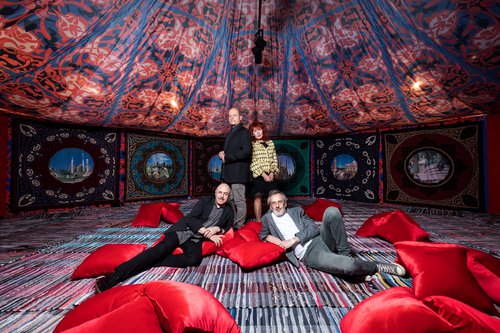
Saodat Ismailova. Melted into the Sun, 2024. Commissioned by Fondazione In Between Art and Film, Bathalha Centro de Cinema. Photo by David Aebi. Courtesy of the artist
At Kunsthalle Bern, Uzbek artist Saodat Ismailova explores the fragile relationship between memory, identity and the histories we inherit. Through seven immersive video installations, ‘Amanat – As We Sleep’ raises questions about what we choose to preserve, what we leave behind and our responsibility to future generations.
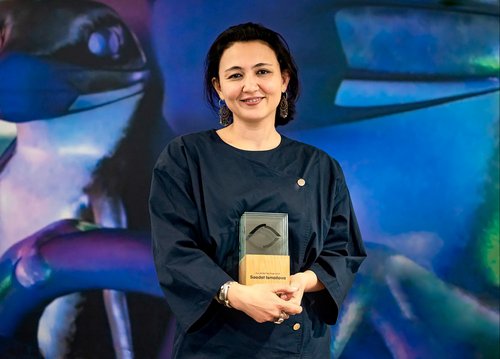
A solo exhibition of work by Saodat Ismailova (b. 1981), ‘Amanat – As We Sleep’, currently on view at Kunsthalle Bern, asks what it means to inherit something that never belonged to us and whose legacy will outlive us. Bringing together seven large-scale video installations across two floors, the exhibition marks the Uzbek artist and filmmaker’s first solo presentation in Switzerland. Based between Paris and Tashkent, Ismailova moves fluidly between cinema and contemporary art. Her work featured at both the 59th Venice Biennale and documenta fifteen in 2022. Writing for Art Focus Now in 2023, Anastasia Spirenkova cautioned against confining her practice to familiar categories, observing that it “does not limit itself even to Central Asian, or even post-communist art, nor to female art.” Through moving image and sound, Ismailova weaves together myth, oral tradition and landscape, exploring their intersections with personal and collective memory and political history. The Bern exhibition also offers an insight into the evolving institutional vision of Kunsthalle Bern under the direction of curator iLiana Fokianaki.

Compact but unusually influential in the history of contemporary exhibition-making, Kunsthalle Bern occupies a temple-like building dating from 1918, its interconnected galleries retaining an almost domestic intimacy. Before encountering the first film, visitors pass three objects from the ‘Amanat’ series – a gold date pit, a walnut from Arslanbob (Ed. – an Uzbek village in Kyrgyzstan) and an imagined hybrid seed – introducing the exhibition’s central themes of receiving, preserving and entrusting before they unfold on screen.
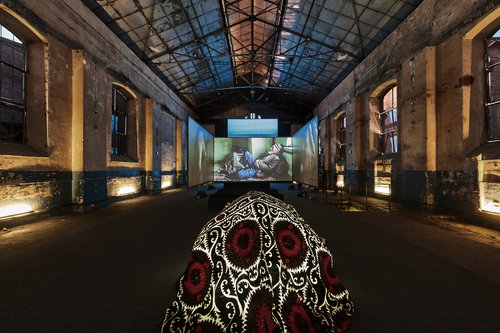
Having travelled from Basel with my eight-year-old son, I soon found us reclining on the traditional kurpacha mattresses, allowing the images and sounds to dictate the rhythm of our attention. On the main floor, ‘Amanat’ explores inheritance through sleep; ‘Melted into the Sun’ moves from solar worship to technology and power; ‘The Seven Sleepers’ imagines sleep as a form of protection and suspended time; and ‘Swan Lake’ revisits the shifting media realities of the late Soviet period. Downstairs, ‘Zukhra’ centres on the almost motionless figure of a sleeping woman; ‘As We Fade’ interweaves archival and contemporary images of a landscape shaped by memory; while ‘18,000 Worlds’ opens onto a cosmology in which different forms of knowledge and existence coexist.

Together, the seven films run for more than three and a half hours. With subdued lighting and traditional kurpacha mattresses arranged throughout the galleries, the exhibition encourages a slower, more contemplative form of viewing, transforming the experience into one of sustained, almost dreamlike immersion.
At the heart of the exhibition, ‘Amanat’ follows a young man gathering walnuts in Arslanbob who falls asleep beneath a tree. Myth and lived experience gradually merge as loss, fractured truths and inherited histories come to the surface. The film draws on a legend in which the mystic Arslanbob holds a date pit beneath his tongue for two centuries before entrusting it to a seven-year-old boy. Derived from the Arabic amānah, meaning ‘trust’, amanat describes an inheritance that is never fully possessed: “a memory, a story, or a body of knowledge that must be safeguarded before being passed on.”

‘As We Fade’ extends this exploration of inheritance from human experience to images and places, juxtaposing archival and contemporary views of Sulaiman-Too to consider how landscapes preserve histories even as their meanings evolve. ‘Swan Lake’ brings together Central Asian cinema, Soviet television and mass hypnosis surrounding the collapse of the USSR, examining the role of images and ideology in shaping collective reality. ‘The Seven Sleepers’, meanwhile, transforms sleep from an individual experience into a metaphor for protection and passage, setting the suspended time of human existence against the longer temporal rhythms of religion, history and the natural world.
Beyond its exploration of collective memory and inherited histories, Ismailova’s work also prompted a deeply personal reckoning with my own experience of displacement and belonging. Lying beside my son, I remembered my hurried departure from Russia in 2022, the months I spent in Tashkent, and wandering through Uzbekistan’s mountains as a recent émigré, between a world I had left and another not yet formed. ‘Amanat’ suddenly seemed less benign than the language of care might suggest: I found myself thinking about the parts of the post-Soviet world I have spent four years trying both to transmit and to leave behind. Should I pass on the language of a family and country that belong to his past more than his present; how should I explain the culture and political burden of the post-Soviet world to a child who now belongs to another one; and can a parent decide which parts of an inheritance will be transmitted and which will end with him?

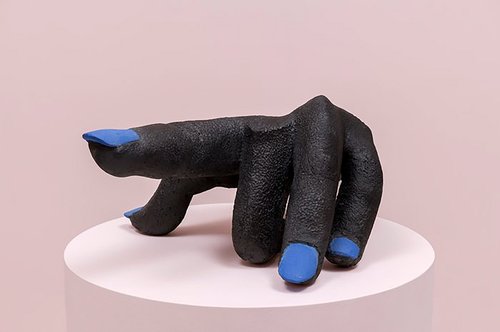
Ismailova’s project began in New York in January, when the Swiss Institute presented the world premiere of the first iteration of ‘Amanat’ in an exhibition curated by its director, Stefanie Hessler. Alongside ‘Amanat’ and ‘Swan Lake’, the exhibition featured two quadraphonic sound works recorded in Arslanbob and three small sculptures. Conceived as a project unfolding across three institutions, it travelled to LUMA Arles, where ‘Amanat’, ‘The Sacred Forest’ opened on the 4th of July. This second chapter broadened the presentation to encompass film, installation, archival material and sound, exploring Arslanbob as both a living landscape and a repository of stories. The project reached its final destination at Kunsthalle Bern on 11th of September, in an exhibition curated by iLiana Fokianaki in collaboration with Claudia Heim.
The Greek curator and theorist iLiana Fokianaki founded the independent non-profit State of Concept Athens in 2013 and later established The Bureau of Care, a research platform exploring politics and ethics. Appointed director of Kunsthalle Bern in 2024, she introduced ‘The Fermenting Kunsthalle’, a seven-year programme aimed at making the institution more open and accessible. In 2025, this ambition took physical form with a new doorway cut through the museum wall, symbolising its transformation. Fokianaki has described the legacy of Harald Szeemann as a “ghost” haunting the building: a defining figure of the Western avant-garde whose canon largely overlooked women and non-Western artists. Exhibitions devoted to Ibrahim Mahama (b. 1987), Melvin Edwards (1937–2026) and Tuli Mekondjo (b. 1982) reflect her determination to address these omissions.

Fokianaki and Ismailova share a striking conceptual affinity, particularly in their approaches to care, permeability and the relationship between knowledge and power. Fokianaki’s longstanding interest in care finds an echo in amanat, an inheritance entrusted to one’s protection but never fully possessed. Her vision of a “permeable institution” resonates with Ismailova’s invitation to a more fluid, receptive way of seeing. Both also question established structures of authority: Fokianaki through her examination of land, labour and extraction, and Ismailova through her treatment of Arslanbob as a landscape of ecological, spiritual and political significance. Just as Fokianaki challenges institutional hierarchies, Ismailova allows archives, myths, dreams and ancestral knowledge to coexist without privileging any single version of truth. Having spent several months in Tashkent in 2022, where Soviet legacies, contemporary art and Islamic and pre-Islamic traditions intersect, I recognised this plurality not merely as a curatorial proposition but as a cultural reality I had witnessed firsthand.

The Bern exhibition distinguishes itself from its earlier iterations by placing sleep at the centre of a broader exploration of Ismailova’s practice. ‘Zukhra’ (2013) connects sleep with female spirituality, healing and a “quiet form of refusal”; ‘18,000 Worlds’ explores the coexistence of different forms of knowledge and existence; while ‘Melted into the Sun’ traces the transformation of the sun from sacred force to technological resource. The change in title from ‘The Sacred Forest’ to ‘As We Sleep’ thus signals a shift in emphasis rather than a new departure. It also resonates with Fokianaki’s vision of an institution conscious of its own responsibilities. As she observes, “Neutrality does not exist in art institutions – simply because they are composed of humans.” Here, amanat becomes a compelling institutional metaphor: an inheritance to be safeguarded rather than possessed. For Kunsthalle Bern, this encompasses not only the art it presents but also its building, history, cultural authority and the legacy of Harald Szeemann. His landmark exhibition ‘When Attitudes Become Form’ invites an intriguing reversal – ‘When Forms Become Attitude’ – raising the question of how inherited institutions shape the ways we see and understand art. Ultimately, the exhibition suggests that the value of an inheritance lies not in preserving it unchanged, but in accepting responsibility for what it becomes when passed on.
Saodat Ismailova. Amanat – As We Sleep
Bern, Switzerland
11 September – 22 November 2026