

DaDim Group: Fighting Digital Windmills with Archaic Charms

DaDim duo (Dasha Delone and Dima Goryachkin) and Vasilisa Delone. Rings, Rings, Rings..., 2026. Courtesy of the artists
In Montenegro an émigré artist family conjures up a mythical lost civilization in clay, blurring craft and fine art. Ceramics, totems and invented alphabets push back against digital culture, finding grounded permanence in their adopted Balkan homeland.
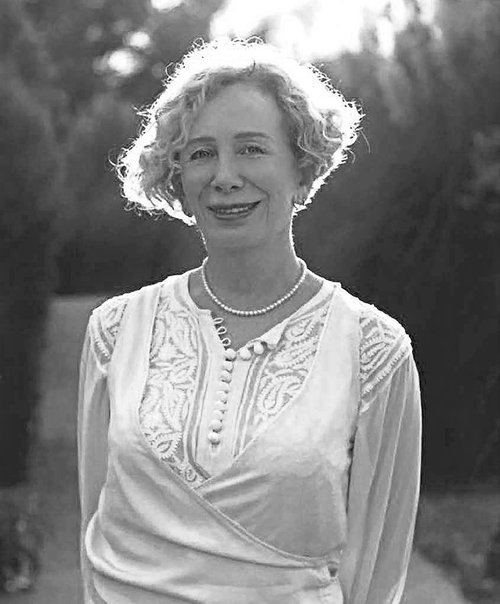
A family of émigré Russian artists based in Montenegro has created a project that is both outlandish and firmly rooted in Balkan soil. The artist couple, Dasha Delone (b. 1972) and Dima Goryachkin (b. 1964), call themselves the DaDim group and started working together around fifteen years ago. They have held solo exhibitions at the Museum of Oriental Art, the Bulgakov Museum and the Vadim Sidur Museum in Moscow, and the Mark Rothko Art Centre in Daugavpils, Latvia. Delone and Goryachkin have a background in journalism, having worked for Vedomosti, one of Russia’s major business newspapers for many years before its rigorous journalistic standards slackened following a change of ownership. Six years ago, they left their jobs and moved to Montenegro, a small Balkan country that has since become a safe, visa-free haven for many Russians who fled their homeland when a massive wave of migration arose in 2022. They settled in the picturesque resort town of Herceg Novi, on the shore of Boka Bay near the Croatian border.

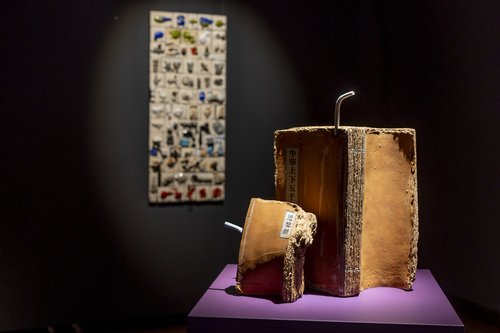
For their project ‘The Archaeology of Consciousness,’ the couple were joined by their eldest daughter, Vasilisa Delone (b. 1992), who is an artist and illustrator. Together, they filled a designer furniture showroom in the upscale Porto Montenegro complex (comprising boutiques and posh restaurants around a megayacht marina) with strange and unusual artefacts. Most are ceramic objects which are covered in obscure symbols and signs. Some hang on the walls seemingly for the purpose of chasing away evil spirits, while others have a specific function. Alongside paintings, sculptures, and photo prints on metal, there are coffee tables, framed mirrors, plates, vases, and even lamps called 'Lightosaurs' that bear an ominous resemblance to carnivorous plants. The distinction between household items and works of 'pure art' in the project is deliberately blurred, as in prehistoric times when art and craft were one and the same. According to the artists' self-devised mythology, these pieces are remnants from a lost culture of a mythical nation called Dadim.

This interest in mythmaking connects this expat trio’s art with latest trends on the Moscow art scene, where fairy tales have now become mainstream and their project would look very much at home in any Moscow gallery or art fair. The glazed surfaces of the ceramics are covered in signs from an imaginary alphabet, which supposedly convey the names of Faith, Hope and Love – three Christian virtues – rather than mundane facts and figures. Most of the works of art are made of ceramics, a medium that was chosen for conceptual reasons – and also because it was a daring choice, given that only Dasha had previously worked with the medium. “As a ceramic artist, I have long tried to draw my family into it, and I have finally succeeded,” the artist told Art Focus Now at the opening of the exhibition. She and Goryachkin have both long been interested in archaic cultures. At the Museum of Oriental Art, their works were displayed alongside genuine ancient artefacts. ‘The Archaeology of Consciousness’ sometimes resembles a non-verbal account of a tour through the galleries of the museum. The project contains an eclectic mix of cultural references, ranging from Archaic Greece to Indigenous America to China. Some of these references border on kitsch, such as the dragon-shaped indoor fountain and the human-sized ceramic totem poles.

These days, artists are fascinated by dark, forgotten eras, when every handmade object was magical and craftsmanship went hand in hand with sorcery. As Dasha explained, they are raising their voices against the total digitalization of today's world, where life is played out entirely online and AI blatantly abuses artist copyright. For them, their new homeland, with its stunning natural beauty and ancient history, is a small stronghold standing up against today’s superficial, fast-paced, heavily digitalized culture. “In Montenegro, people cling to their roots, their land and their soil. They are very grounded. They seem to be immune to the universal illness of modern humanity,” she observes. Their aversion to digitization and their yearning for physical, tangible art was among the reasons they chose ceramics as the main medium for this project. With clay and fire, the physical aspect is paramount, and the outcome is always unpredictable due to the inherent unpredictability of natural processes. “With ceramics, something always goes wrong. No matter what you plan to do as an artist, the gods of ceramics will intervene and the result will be slightly different from what you expect,” says Dasha.

DaDim duo (Dasha Delone and Dima Goryachkin) and Vasilisa Delone. Lightosaur No. 3, 2026. Courtesy of the artists

DaDim duo (Dasha Delone and Dima Goryachkin) and Vasilisa Delone. Lightosaur No. 4, 2026. Courtesy of the artists

DaDim duo (Dasha Delone and Dima Goryachkin) and Vasilisa Delone. Lightosaur No. 5, 2026. Courtesy of the artists
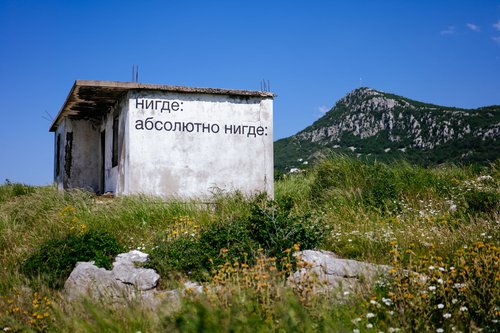
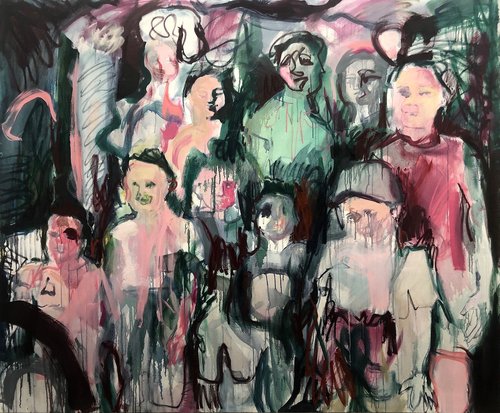
For a native of a contemporary metropolis such as Moscow, Montenegro certainly looks like an oasis of sanity. Russia’s capital is increasingly resembling a dystopian city from a sci-fi film, with CCTV cameras above every door and screens flashing everywhere, from bus stops to outpatient hospitals, where dedicated staff members help elderly people navigate them. In contrast, Montenegro seems blissfully non-digitized. There are no screens in public spaces except during football World Cup weeks, and there is no Uber or Amazon. You can happily live without using apps or credit cards. The region’s turbulent history has many dark chapters, the most recent war was just three decades ago. The echoes of unspoken tragedies, both old and new, resonate throughout DaDim’s imaginary universe, especially in their pseudo-naïve paintings, such as ´Night in Herceg Novi´, in which a peaceful, moonlit waterfront is invaded by strange, fearsome creatures emerging from the darkness.


A few works from Delone and Goryachkin’s earlier projects fit perfectly into this puzzle, such as metal panels with cut-out holes in the shape of a human silhouette or a Giacometti-like emaciated sculpture. Shadows and ghosts abound in this imaginary universe alongside charms, amulets, totem poles, and guardian creatures that are supposed to chase off the forces of evil. “Montenegro has always been an eye of the storm. There is hope that it will somehow evade the seemingly impending global catastrophe,” says Dasha. Though not quite historically accurate, this description sounds like a soothing mantra. This may strike a chord with new immigrants who have been suddenly uprooted from their homeland and are now connected to it only by fragile digital threads. For many, Montenegro's forthcoming entry into the European Union is a cause for new fears and uncertainty, as they grapple with the slow-moving Balkan bureaucracy and tightening border restrictions. DaDim's subtle cultural games could be seen as an attempt to escape the tides of history by retreating into a fantasy world – a form of art therapy for one expat family, the results of which are shared with the wider, traumatized community.