

Chachkhiani’s Though-Provoking Installation on View in Beijing

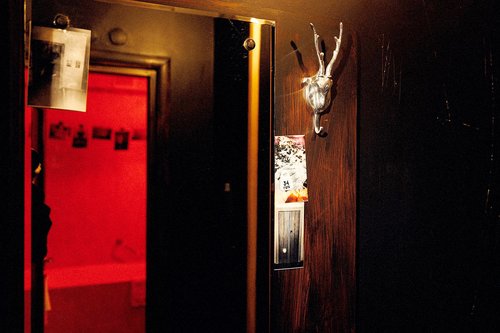
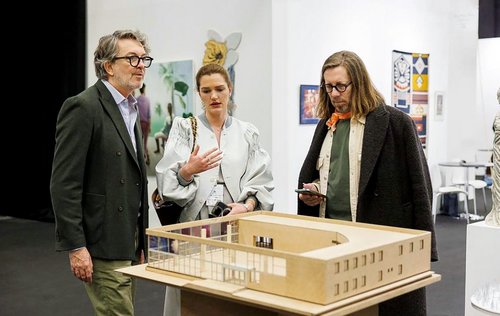
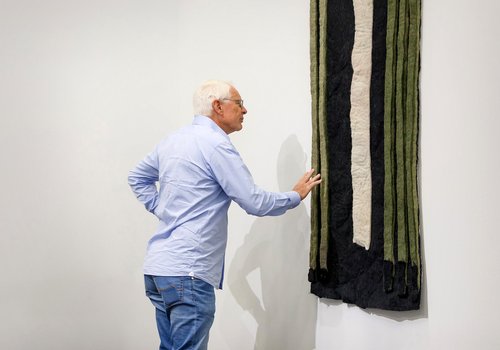
Living Dog among the Dead Lions (Agape). Exhibition view. Beijing, 2025. Courtesy of White Space
In ‘Living Dog among the Dead Lions (Agape)’, Vajiko Chachkhiani constructs a powerful meditation on endurance, memory, and the slow aggression of time. Recommissioned for White Space Gallery after its debut at the Georgian Pavilion of the 2017 Venice Biennale, the installation transforms a rural house from eastern Georgia into an immersive environment where rain, absence, and decay articulate the fragile boundaries between shelter and exposure, life and erasure.
Originally presented in the Georgian Pavilion at the 2017 Venice Biennale, Living Dog among the Dead Lions (Agape) has recently been recommissioned for White Space gallery in Beijing. The work is based on a real house with its own layered history, which the artist restored and reimagined as a sculptural installation, transported from eastern Georgia – a region shaped by political and ethnic instability and heightened strategic sensitivity. While deeply rooted in a specific geography, the installation avoids direct narration, instead translating local history into a universal spatial and emotional experience.

Born in Tbilisi in 1985, Vajiko Chachkhiani belongs to a generation of Georgian artists whose practice has been shaped in the aftermath of the collapse of the Soviet Empire, regional conflicts, and ongoing experiences of displacement and migration. Working across sculpture, large-scale installation, performance, and the moving image, he repeatedly engages with themes of memory, loss, hope, endurance, and the fragility of domestic and social structures. Chachkhiani typically translates collective trauma into spatial and sensory experiences, using architectural fragments, everyday objects, and bodily metaphors to evoke the slow, often invisible impact of time and historical pressure on lived environments.

Before taking part in the Venice Biennale, Chachkhiani had already gained some recognition in Europe through solo exhibitions such as ‘Both’ at Museum für Gegenwartskunst, Siegen (2014) and ‘Many Lives Passing Through While Imitating Death’ at Kunsthaus Dahlem, Berlin (2015), as well as early films like ‘Life Track’ (2014) exploring perception and interior states.
Since Venice, there have been numerous solo exhibitions across Europe and Asia, including ‘Heavy Metal Honey’ at Bundeskunsthalle in Bonn (2018), ‘Flies Bite, It’s Going To Rain’ at YARAT in Baku (2018), ‘Death Chase’ at Daniel Marzona, Berlin (2020), ‘Finger, Fist, and Thumb Sucking’ at White Space, Beijing (2022), ‘Lower Than the Sky’ at Kunstmuseum Brandts, Odense (2022), ‘Big and Little Hands’ at SCAI The Bathhouse, Tokyo (2024), and ‘Winter Which Was Not There’ at Tartmus, Cork (2025).

Immersion into Vajiko Chachkhiani’s installation begins even before one arrives at White Space Gallery, located some forty minutes from the centre of Beijing. Before encountering the work’s “space of action,” the visitor becomes aware of sound and scent: the persistent noise of rain and the unmistakable smell of dampness. A wall text explains that rain falls continuously inside the installation. We arrived early in the day – before other visitors – and witnessed the precise moment the rain was activated. The quiet, almost distilled exhibition space was suddenly transformed into a site of action, a place of lived presence, as the house and the rain within it came fully into being.
Upon entering the exhibition space, one is immediately confronted with the totality of ‘Living Dog among the Dead Lions (Agape)’. The work engages all the senses, yet above all it provokes a powerful desire to enter the house itself, evoking the familiarity of a rural dwelling or dacha. Entry, however, is strictly prohibited. The viewer is left to observe the interior only through windows and doorways, a distance that is essential to the experience. We are not guests in this house; we are observers.
The structure appears to have been abruptly abandoned by the family who once inhabited it. Everyday objects – cooking utensils, a bed, kerosene lamps, mirrors, glasses, and wine goblets laid out on the table – register a palpable sense of loneliness in the absence of human presence. Yet they continue to resonate, to “sound,” as rain falls relentlessly inside the house. In an interview with Ines Rüttinger for the catalogue accompanying his exhibition at the Museum für Gegenwartskunst Siegen, Vajiko Chachkhiani described art as a “passage to articulation, a kind of rite of passage,” in which the viewer is invited not to inhabit the space physically, but to undergo an internal and emotional transition.

This sound serves a dual function. On the one hand, it disrupts silence and forestalls introspection; on the other, it immerses the viewer in the atmosphere of a rainy day in the countryside, compelling reflection on why the rain falls inside the house rather than outside. This inversion is inherently paradoxical, as the primary function of a dwelling is to shelter its inhabitants from rain and the elements.
The sound of rain also performs a temporal function. At first glance, there is an illusion of the suspension of time in the house, its history and epoch. Yet the rain undermines this illusion. While the exterior of the house appears intact, the interior is subject to slow decay, as objects deteriorate under the combined pressures of time and water. The rain also becomes a mediator between the viewer and the installation. Its sound simultaneously draws the viewer in and operates like a metronome, marking the passage of time during one’s encounter with the work.

Overall, the installation seems to be constructed around contradictions. Before us stands a house that is empty and yet unmistakably lived in. While a home is meant to shelter people from the elements, here it appears to shelter the rain from us – the artist has conceived the work as a sculpture to be viewed from the outside, circled but never entered. Inside, the objects evoke traces of life, yet under constant rain they are slowly being destroyed: decaying and rotting. This tension reflects Chachkhiani’s broader approach: “Through death I tend to communicate something about life and its preciousness. Through violence something about intimacy.” he said in an interview with Ines Rüttinger for the catalogue of his exhibition in Museum für Gegenwartskunst Siegen.
The installation evokes nostalgia not as personal recollection, but as a constructed emotional response, one that can emerge even in those with no direct experience of rural life. The work simultaneously evokes warmth and intimacy, as well as darkness and unease. It reflects on how history and memory can become distorted over time under different political and social pressures, just as the objects inside the house are deformed by the constant deluge of rain.

Apparently weightless, hollow sculptures made of recycled leather surround the house: a goat, a lion with a piece of meat suspended above it, and a range of domestic forms – chests, stools, pots, boots, jugs, and stones. Some rest directly on the floor, while others hang from the walls or are suspended from the ceiling. These leather sculptures are a recent addition to the work. Created by wrapping leather around everyday objects and subsequently removing them, they remain as hollow shells – light, emptied traces of their former selves. Reduced to silhouettes, the objects appear stripped of function, substance, and lived histories, reading less as usable things than as residues or afterimages.
In his curatorial text for White Space gallery Chachkhiani describes them as “emotional echoes, imprints of memory,” extending the narrative of absence initiated by the house itself.

Houses and rain carry strong symbolic weight in modern and contemporary art vocabulary. In ‘Rainy Taxi’ (1938), Salvador Dalí (1904–1989) uses a system of pipes to create rainfall inside the cabin of a taxi so that water falls on top of dummy passengers. Unlike Dalí’s surreal and theatrical gesture, in ‘Living Dog among the Dead Lions (Agape)’ the rain physically transforms and erodes the interior, linking environmental force to memory, history, and the psychic life of the space.
In his 1992 installation ‘Incident at the Museum or Water Music’, Ilya Kabakov (1933–2023) fills a museum-like space with water dripping steadily into basins and dishes. While both Kabakov and Vajiko Chachkhiani engage with the theme of absence – the disappearance of workers or inhabitants – Kabakov’s work depends upon the physical passage of the visitor through the space and frames the sound of water as the result of an accident or system failure. In contrast, Chachkhiani’s rain is neither incidental nor mechanical, but elemental: a force that is continuous, deliberate, and intrinsic to the work’s emotional and symbolic register.
‘Empty House’ (2014) by Vladimir Chernyshev (b. 1992) explores the theme of death through the decay of wooden architecture. A house built from planks of wood appears on the verge of collapse, a final breath of mortality. In contrast, Chachkhiani’s ‘Living Dog among the Dead Lions (Agape)’ stages a slower death.

The title of the work is drawn from Ecclesiastes 9:4: “Anyone who is among the living has hope – even a live dog is better off than a dead lion.” The chapter may be read as an appeal to live attentively and meaningfully while life endures, acknowledging that all ultimately share the same fate. It concludes with the parable of a poor man whose wisdom saves a city, only for him to be forgotten – an episode that underscores the fragility of recognition and the precariousness of historical memory.
The house remains standing, inhabited by traces of life, yet its contents are subjected to slow erasure. Like the “living dog,” the structure persists not through strength or monumentality, but through endurance. The rain becomes a force that mirrors both time and history, wearing away objects that once stood for stability, love and care. In this sense, the work does not illustrate the biblical passage but echoes its logic: the house is not viewed as a symbol of achievement, but as an image of endurance, hope, and continued life.
Vajiko Chachkhiani. Living Dog among the Dead Lions (Agape)
Beijing, China
8 November 2025 – 10 January 2026