

Born Again: How, Why and at What Price Artists Restore Their Own Works

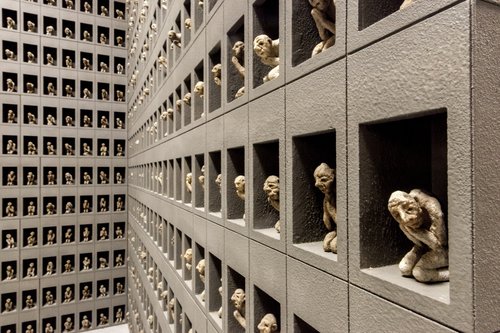
Andrey Kuzkin. From the project 'Heroes of Levitation', 2010. The author's reconstruction, 2025-2026. Courtesy of the artist
Three large sculptures by Russian artist Andrey Kuzkin nearly perished due to neglect before being saved by the timely intervention of a private collector. The artist had to make them again almost from scratch. Self-restoration may look easy on the surface, but it has many hidden pitfalls. Many unexpected questions arise during the process, from “Who pays for it?” to “Is it the same work of art now”?
Andrey Kuzkin’s (b. 1979) project ‘Heroes of Levitation’ seems to have been doomed from the outset. It was commissioned for an exhibition at the Stella Art Foundation in Moscow in 2010. Three sculptures, the tallest of which reached 3.60 metres in height were made of bread and salt pulp, held together by steel framework. According to the artist, they represent the three ages of man. At the opening, there was a performance: Kuzkin, stark naked, lounged in a hammock hanging from the ceiling high above the visitors’ heads.

However, the event was marred by another unauthorised performance when an aspiring artist crashed his jeep through the gallery's floor-to-ceiling glass window. Luckily, nobody was hurt and no artworks were damaged. Kuzkin’s piece was originally conceived as a site-specific installation, destined to be dismantled and discarded after the exhibition. However, the Moscow-based V-A-C Foundation requested to borrow it for a group exhibition in Turin and Venice during the Biennale. “As far as I know, Charles Saatchi was interested in buying it, but Stella Kesaeva said that the Foundation does not sell works from its collection,” Kuzkin told Art Focus Now. It later travelled to another exhibition in The Hague. After that, the sculptures went into the foundation’s storage. In the meantime, Kuzkin was enjoying a stellar career. His retrospective at the Moscow Museum of Modern Art was a big success. The artist won the prestigious Kandinsky Prize twice, as well as the State Innovation Award twice. A solo exhibition of his work at the State Tretyakov Gallery had been scheduled for 2022.
However, everything changed after Russian troops entered Ukraine in February 2022. The Tretyakov exhibition was cancelled. The artist emigrated to France, spending over two years in exile. “A year ago, when I was in France, I received a call from the foundation’s director, who asked if I wanted to retrieve my artwork. Otherwise, they were going to throw it away,” Kuzkin explains. A few months later, when he decided to return to Russia, he discovered that the sculptures were in awful condition. “Bugs had eaten almost all of the bread; only the inner steel frames remained. There was a dried rat corpse inside one of them”. The artist says that he had warned the foundation staff not to wrap the sculptures in plastic film, as they would deteriorate due to the humidity, but his warnings were ignored.

It was a challenging task to find an affordable storage space for the sculptures in Moscow. It took Kuzkin six months to decide what to do with them. “Museums refused to accept them, even as a gift. One museum in Krasnoyarsk agreed to take one of the three figures, but only on the condition that I remove its genitals,” he recalls. Eventually, Igor Sukhanov, a renowned collector from St. Petersburg, agreed to pay for the restoration on the condition that the sculptures would enter his collection. “The materials and assistants’ fees alone amounted to 500,000 roubles,” says Kuzkin. (This is roughly equivalent to 5,000 Euros.) “He also paid me a fee for my work.” The process took six months, he adds. Kuzkin had to discard the remains of the old bread pulp and sculpt the artworks anew.
He used about 300 loaves of rye bread to make each sculpture. This time, he added disinfectant to the pulp to make it less appealing to insects and rodents. When I visited the storage facility on the outskirts of Moscow to view the reborn artworks before they were shipped to St Petersburg, the figures appeared as powerful as ever, and the air was filled with the enticing aroma of rye bread. Perhaps the surface is less rough and cracked than in photographs from past exhibitions. “Of course they look slightly different now,” the artist admits. “The times have changed, and I have changed too!” He says he prefers to call the work he did on them ‘reconstruction’ rather than ‘restoration’. He is quite happy with how this story ends: the sculptures have entered a good collection and will be exhibited at a prestigious venue in St Petersburg this summer.

In many cases, artists restore their works free of charge, particularly when the collectors are their friends. "I once had to mend a small papier-mâché sculpture because the owners' dog had bitten off its head. Luckily, they managed to snatch the head from the animal's mouth," recalls sculptor and painter Egor Plotnikov (b. 1980). Two paper-and-cardboard sculptures by Moscow artist Mikhail Molochnikov (b. 1963) were were selected for the ‘Paper Sculpture’ exhibition at the State Russian Museum in St Petersburg. They were in a private collection, but the artist persuaded the owner to lend them to the museum. However, when she got them back, one of the sculptures was broken. “I restored it free of charge because it was my idea to send it to that exhibition,” the artist recalls. According to Molochnikov, the collector stressed that she wanted the restored piece to look exactly as it did in the exhibition catalogue. “Since I always have new ideas, I restored the front, which was photographed for the catalogue, to its original state, yet I reworked the back, making it far more complex.” Eventually, the collector was very happy about this”. Such things happen not only in Russia. A sculpture by Elena Nemkova (b. 1974), a Tajikistan-born artist based in Milan, made out of birch bark and acrylic, was damaged during dismantling after an exhibition in an Italian gallery. The piece had been sold during the exhibition and was not insured. “The gallerist panicked and told me he was going to send it to the buyer as if nothing had happened,” she recalls. However, as she had a good relationship with the collector, she decided to tell him about the situation and to restore the artwork at her own expense. “I parted ways with this gallery after this incident,” she says. Another of her sculptures, made of bronze and synthetic materials, was damaged by inadequate storage conditions. Spots appeared on its surface, requiring expensive professional restoration. “There was a heated argument between the collector and the gallery – they could not agree on who should pay the restorer’s bill.” Although the artist was not involved in the dispute, she took steps to protect herself in future. “Now, when I submit an artwork to a gallery, I always send a letter with my recommendations for storage conditions. The letter concludes with a statement that, unless I receive any questions or comments on the subject within a certain period of time, I will not accept any complaints after this deadline.”
The relationship between artists and restorers is often ambiguous. Sometimes there is camaraderie and mutual admiration. Egor Plotnikov (b. 1980), for example, was so impressed by the beautiful new round stretcher that restorer Veronika Nazarova had ordered for his water-damaged painting that he jokingly advised the collectors to hang the work back to front. However, artists are not always happy with restorers’ efforts. “For some reason, people love to restore my works – etchings on bronze, in particular – without my knowledge. Although I’m open to collaboration. There’s this attitude towards metal that anyone can handle it,” notes St Petersburg-born, London-based sculptor Liza Bobkova (b. 1987). Recently, she was sent a photo of one of her pieces from a private collection. The owner wanted to verify some details about the artwork. When the artist saw it, she was horrified. “It looks as though they’ve gone over it with the coarsest sandpaper, whereas I applied a multi-layered hand polish. I’ve forbidden them from exhibiting it in this state until it’s been rectified and have said that I’ll publicly renounce my authorship if they don’t comply.”

Sometimes, artists choose to submit to the whims of collectors to keep them happy. Pavel Otdelnov (b. 1979), a Russia-born, London-based artist, recalls the adventures of his landscape painting, ‘Speed’. “The buyer felt that the shine was uneven, so I removed the satin varnish layer and recoated the piece with a matt finish,” he says. “Incidentally, after that, the piece was sold again at auction and found its way into a very good collection. I'm not sure if it could be called a restoration, though.” Almost every artist has a funny story on the subject. “One of my nudes was in a private collection, and the owner got into an argument with his friends over the model's identity – she resembled someone else's wife, and the husband wasn't happy about it. The discussion became so heated that the painting was damaged, and I had to restore it,” recalls Moscow painter Alexey Sergeev (b. 1978). “The owners damaged my painting, brought it back to me and asked for their money back. I restored it and sold it to someone else, a very good person. I never gave the money back to those guys, of course,” says Ukraine-born, Moscow-based Dmitry Plotkin (b. 1960).

When it comes to new media art, independent restorers are often unable to resolve issues because the technology developed by the artist is unique. In such cases, collectors must invite the artist to their home to carry out the necessary repairs, sometimes even travelling to another country to do so. This has happened twice to St. Petersburg-based artist Marina Alexeeva (b. 1959). She is renowned for her 'life boxes' – miniature video installations in which her surrealist cartoons are projected onto tiny interiors inside a box through a system of mirrors. “There are Chinese electronics inside that may break down after a while. When this happens only I can fix it, as I have to take the whole thing apart and then reassemble it,” she says. The artist is represented by the Marina Gisich Gallery. Sir Elton John came there once when performing in St Petersburg during a concert tour, and bought three of Alexeeva’s boxes. “A few years later, one of them broke, so the gallery sent me over to London,” she says. “When I took a taxi from the airport to the hotel the driver asked me ‘Are you sure you want to stay there? It’s terrible’, and it turned out he was right. My room was in the basement and as small as a cupboard. Both the staff and the guests looked stoned.” The next morning, Sir Elton’s driver picked her up from that slum in a white limo and drove her to the singer’s estate in Windsor. “I knew he had a huge art collection and for some reason, I thought he would keep my work in a garage. But there was a separate building for the artworks, and there they were, displayed alongside pieces by the Chapman brothers and Anthony Gormley”. A few months later, the second life-box broke, and she travelled to London again. This time, Sir Elton’s assistant drove her to the estate. He gave her a tour of the house, which was filled with paintings and fine porcelain, and invited her to have breakfast there with Sir Elton’s two spaniels. “They both had their own chairs. They jumped on them and sat there, clearly waiting for a treat.” Unfortunately, she never had a chance to meet Sir Elton himself as he was too busy. She received no fee for the restoration work, but the gallery covered her travel expenses. Nowadays, the gallery includes the cost of a possible ‘restoration trip’ in the price of her works, she says.

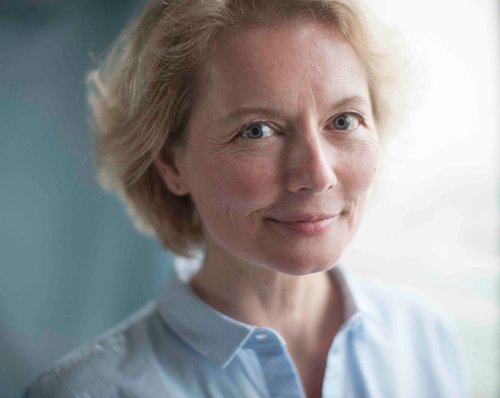
Insurance seems an obvious solution for collectors and gallerists to avoid extra costs when a piece of art needs restoration. However, sometimes money alone cannot solve the problem. For Olga Kisseleva (b. 1965), a Russian-born artist based in Paris, the restoration of her own artwork proved quite challenging. The piece, titled ‘The Troll’s Mirror’ references Hans Christian Andersen’s ‘The Snow Queen’: in the story, a shard from the troll's mirror pierces the character Kai’s eye. The artwork was a complex, distorted mirror in which the curved section took the form of a banknote and the world was reflected in a grotesque manner. It was commissioned by Caroline Bourgeois, advisor to the François Pinault Foundation collection, for the ‘Money’ exhibition. “I worked on this piece at a small glassworks with an elderly mirror-maker, a true virtuoso. The work then entered the collection and, at some point, the mirror broke. Thankfully, no one was hit in the eye by a shard,” says the artist. Kisseleva was asked to repair the piece. As it was insured, there was a repair budget equal to the full price of the artwork. “My mirror-maker had retired by that time,” the artist recalls. “I visited every glassworks in France and neighbouring countries, but it turned out there were no craftsmen left who could make such curved mirrors.” Eventually, she came up with an ingenious solution: making the mirror out of chrome-plated metal. “It was fortunate that I had struck up a friendship with the design bureau of one of our major car companies. But even for them, it took quite a bit of time to figure out how to do it.” The moral of the story? When it comes to art, it is worth bearing in mind that repairs are always a creative process and should be rewarded accordingly.